-
 WhatsApp: +86 19941574798
-
 sale06@kfqizhongji.com
 WhatsApp: +86 19941574798
sale06@kfqizhongji.com
WhatsApp: +86 19941574798
sale06@kfqizhongji.com
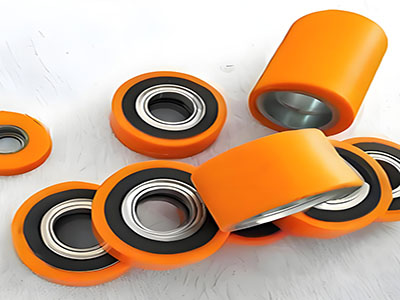
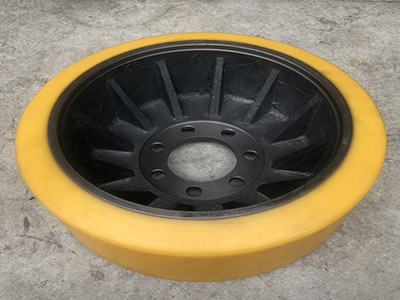
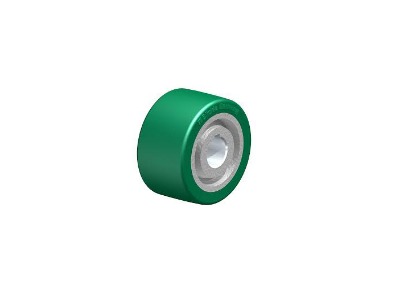
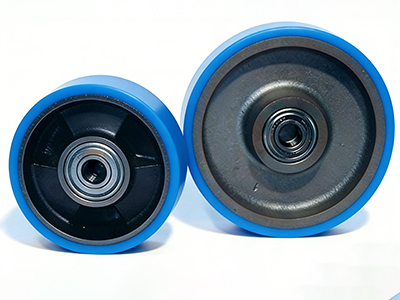
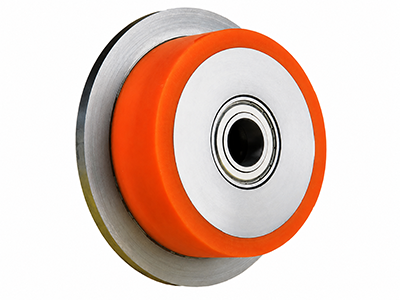
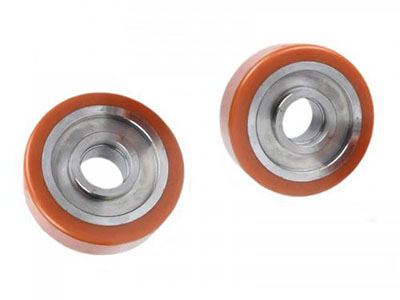
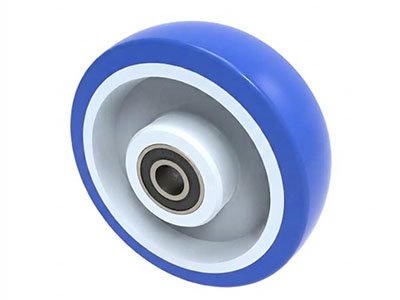
Polyurethane (PU) floor scrubber wheels designed for food & beverage processing are engineered with advanced anti-hydrolysis and tear-resistant technology.
How long can your floor scrubber wheels survive in a food processing workshop scattered with food debris, starch, and other residues? Once conventional scrub wheels come into contact with greasy oils on the floor, they quickly swell and slip. Worse still, under heavy-load rolling, hard food particles on the floor act like sharp blades, frequently cutting into the tire body. Within just a few months, this leaves the wheels riddled with gashes and chunking, or even leads to catastrophic debonding—where the tread completely separates from the rim. This complex and harsh operating environment, which combines oil corrosion, sharp object puncturing, and hydrolytic aging, presents an insurmountable chasm for traditional rubber or standard plastic wheels.
To ensure the highly efficient operation of floor scrubbers within such stringent, food-grade workshops, equipment must be retrofitted with high-performance polyurethane wheels that are both hydrolysis-resistant and tear-resistant.
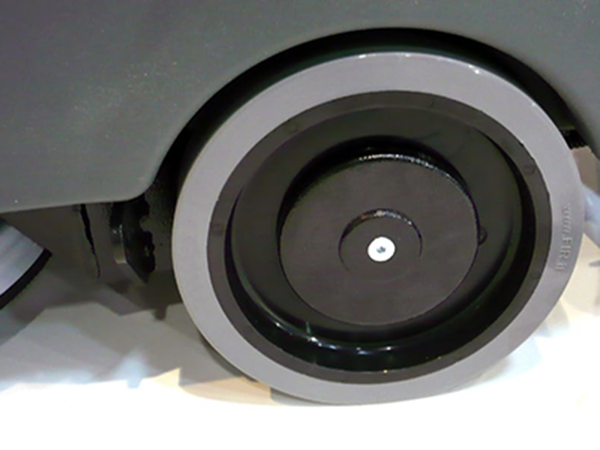
For the extreme and complex floor conditions found in food processing plants, including meat slaughterhouses, beverage bottling plants, and dairy workshops, standard polyester-based polyurethane offers decent wear resistance. However, under high-concentration acid/alkaline cleaners, disinfectants, and high-pressure hot water washes required by GMP hygiene standards, the ester groups in its molecular chains are highly prone to hydrolytic cleavage. This causes the wheel body to become sticky and leads to complete debonding due to shear force failure at the bonding interface between the tread and the core (rim). Conversely, while conventional polyether-based polyurethane is water-resistant, it lacks sufficient tear strength. When rolling over floors strewn with hard debris like bone fragments or nutshells, it is frequently gashed, leading to chunking.
To address this, we eschew standard commodity-grade materials. Instead, we have reshaped the physical and chemical inertness of the floor scrubber wheel using a special high-performance modified polyether system (or a high-hardness polyester system infused with highly effective anti-hydrolysis stabilizers):
1. Precise Material Hardness Control: By optimizing the crosslinking density of the molecular chains, we precisely increase the wheel body hardness to a highly resilient Shore 93A–95A. This ultra-high surface hardness and elastic recovery prevent hard debris on the floor from cutting into or puncturing the material surface under heavy loads. Its tear strength and wear resistance are directly doubled compared to conventional polyether materials, eliminating gashes and chunking at the source.
2. Targeted Blockage of Chemical Hydrolysis: While maintaining nearly 100% excellent hydrolysis resistance, the modified high-performance material exhibits superb immunity to strong alkaline cleaners and oxidizing disinfectants. Even under prolonged exposure to warm, humid, and chemically volatile (acidic/alkaline) environments, its molecular network remains highly stable, never softening or becoming sticky.
3. Anti-Debonding Technology: Complemented by our rigorous metal core surface shot-blasting and multi-pass specialty primer processes, the urethane layer forms a molecular-level chemical bond with the metal interface during high-temperature casting. This ensures that the tread and the rim remain tightly bonded when the wheel hub is subjected to heavy loads and high-frequency steering torque shear forces, completely resolving the pain point of debonding.
Choosing targeted, hydrolysis-resistant polyurethane wheels not only significantly extends the maintenance cycles of floor scrubber dryers in damp and harsh environments, but is also a vital technical investment to guarantee the efficient and safe operation of clean workshops.
Custom Polyurethane Elevator Roller Guides for High-Speed & Freight Lifts
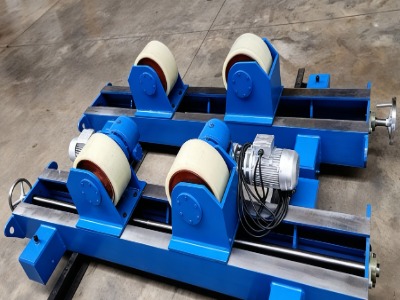
Polyurethane Pipe Wheels for Pipe Roller Stands