-
 WhatsApp: +86 19941574798
-
 sale06@kfqizhongji.com
 WhatsApp: +86 19941574798
sale06@kfqizhongji.com
WhatsApp: +86 19941574798
sale06@kfqizhongji.com
Leading custom polyurethane wheel manufacturer offering Shore 10A–85D formulations, thermoset casting, and proprietary anti-bonding technology.
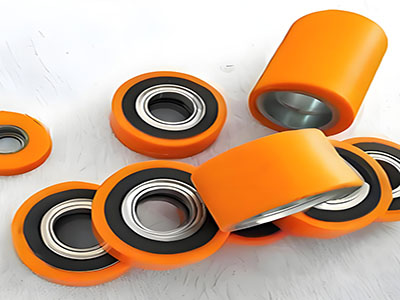
If you are asking, "Is there a company that can make polyurethane wheels?" the short answer is yes. However, the more critical question is: Which company can manufacture the specific wheel that will not fail under your unique operating conditions? Polyurethane (PU) wheels are the workhorses of modern industry, valued for their floor protection, noise reduction, and incredible load-bearing capacity. Purchasing the wrong poly wheel leads to more than just premature wear—it causes de-bonding, floor damage, and expensive equipment downtime. This guide will help you transition from simply sourcing a vendor to partnering with a true industry expert.
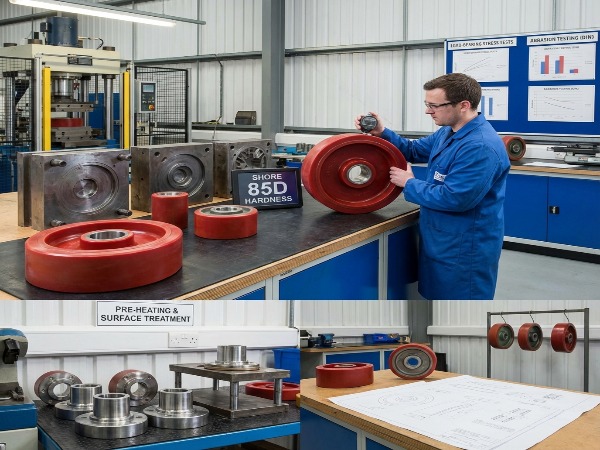
1. Advanced Customization: Precision in Hardness and Formulation
The greatest advantage of PU is its versatility. A top-tier manufacturer must offer more than just "off-the-shelf" products; they should provide custom formulations tailored to your exact application.
Hardness Range: Can the manufacturer provide a full spectrum of customization, from Shore 10A to Shore 85D?
Specialized Formulations: Do they have proven solutions for extreme environments, such as cold storage (low-temperature resistance), humid settings (hydrolysis resistance), or high-frequency/high-load applications (low heat build-up and ultra-high dynamic performance)?
2. Manufacturing Process: Casting vs. Injection Molding
The production method significantly impacts the wheel’s lifecycle and durability.
Casting (Thermoset): The premier choice for heavy-duty and high-performance applications. Thermoset polyurethane undergoes a chemical cross-linking reaction, resulting in superior tear resistance and the elimination of "flat spots" (permanent deformation after long periods of stasis).
Injection Molding (Thermoplastic): Best suited for high-volume, lightweight, and medium-duty needs.
Procurement Tip: Always confirm whether the manufacturer utilizes a thermoset casting process. If your equipment is deployed in heavy industry or high-frequency operations, casting is the key to extending your asset's service life.
3. Core Technology: Bonding Strength (Preventing De-bonding)
The most common failure in poly wheels is not physical wear-and-tear, but de-bonding—the separation of the polyurethane tread from the metal hub. A reliable manufacturer must master precision surface treatment and chemical bonding:
Metal Pre-treatment: Is the hub strictly grit-blasted to maximize surface area for adhesion?
Primer Application: Are high-performance, industry-standard industrial adhesives applied correctly?
Strict Pre-heating: Is the metal core thoroughly pre-heated before the casting process begins?
4. Physical Performance Testing: Data-Driven Quality
Avoid vague marketing claims like "highly durable." A manufacturer with genuine R&D capabilities should provide objective test reports:
Load-Bearing Stress Tests: Simulating compression and deformation under maximum load capacity.
Abrasion Testing (Akron/DIN): Providing specific data on abrasion volume loss.
Rebound Resilience & Dynamic Heat Build-up: Determining if the wheel will melt or degrade due to internal heat generation during continuous, high-frequency operation.
5. One-Stop Service: Hub Machining & Recoating
Partnering with a manufacturer that features in-house machining capabilities can drastically reduce your total cost of ownership:
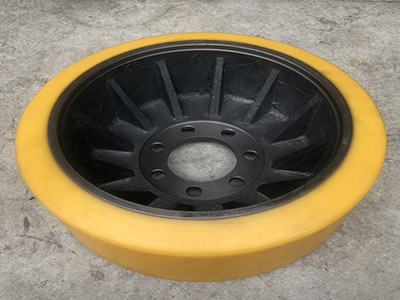
Full-Cycle Production: Can the manufacturer machine their own hubs (Steel, Aluminum, Cast Iron)? This ensures strict tolerance control for the entire wheel assembly.
Recoating Services: For expensive metal hubs, does the supplier offer stripping and recoating? Reusing cores can reduce your procurement costs by up to 50%.
Conclusion: Why Choose Us?
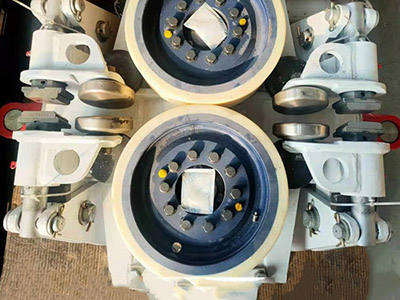
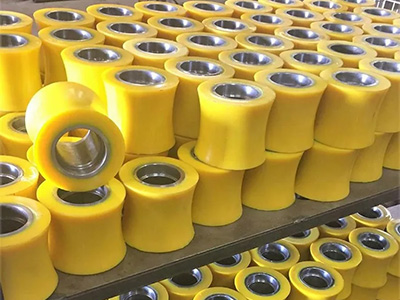
As a professional polyurethane wheel manufacturer, we manage the entire product lifecycle—from raw material R&D and mold design to precision machining and final testing. Whether you require high-durability forklift wheels or ultra-quiet wheels for medical equipment, we deliver custom engineering that exceeds expectations.
Unsure which poly wheel hardness or formulation is right for your environment? Contact us today with your technical drawings or load requirements, and our engineering team will provide a tailored solution.
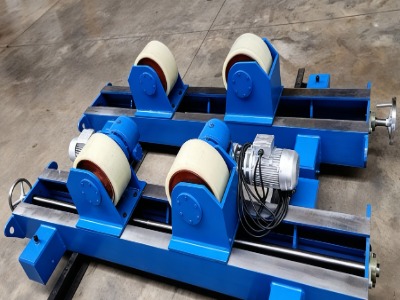
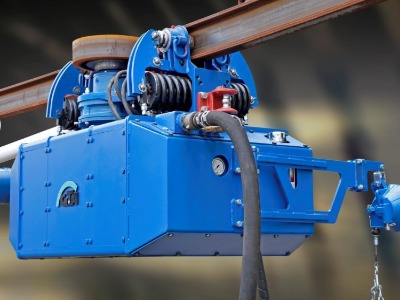
What Industries Benefit Most from Using Polyurethane Industrial Wheels
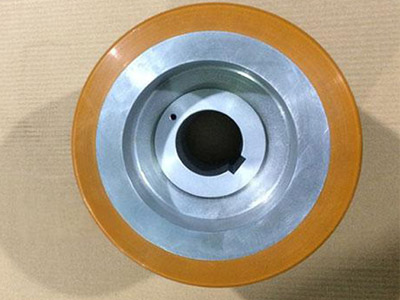
Polyurethane on Aluminum Wheels: 5 Life Factors