-
 WhatsApp: +86 19941574798
-
 sale06@kfqizhongji.com
 WhatsApp: +86 19941574798
sale06@kfqizhongji.com
WhatsApp: +86 19941574798
sale06@kfqizhongji.com
Discover how NDI polyurethane provides the ultimate thermal stability and dynamic load capacity required for high-performance roller coaster wheels.
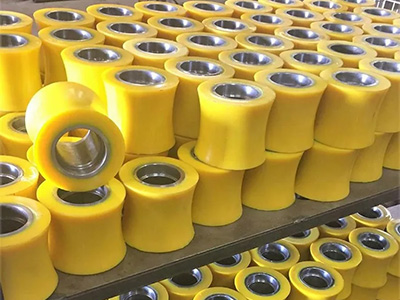
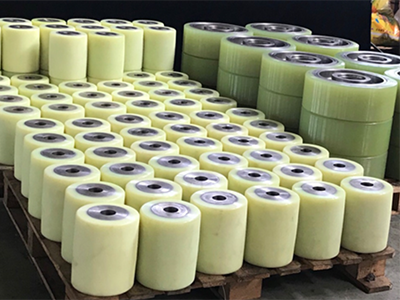
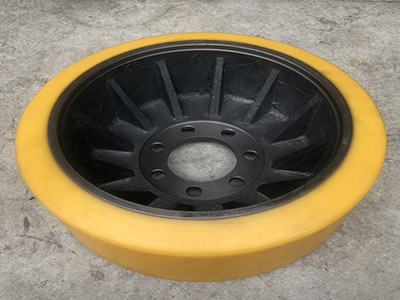
As modern roller coasters continue to push the boundaries of speed, height, and acceleration, standard "off-the-shelf" polyurethane wheels are no longer sufficient to meet the strict safety and performance requirements of today's amusement rides. Amusement park operators and ride manufacturers are increasingly turning to high-performance, hot-cast elastomers based on NDI (1,5-Naphthalene Diisocyanate) to handle extreme mechanical loads and prevent thermal failure.
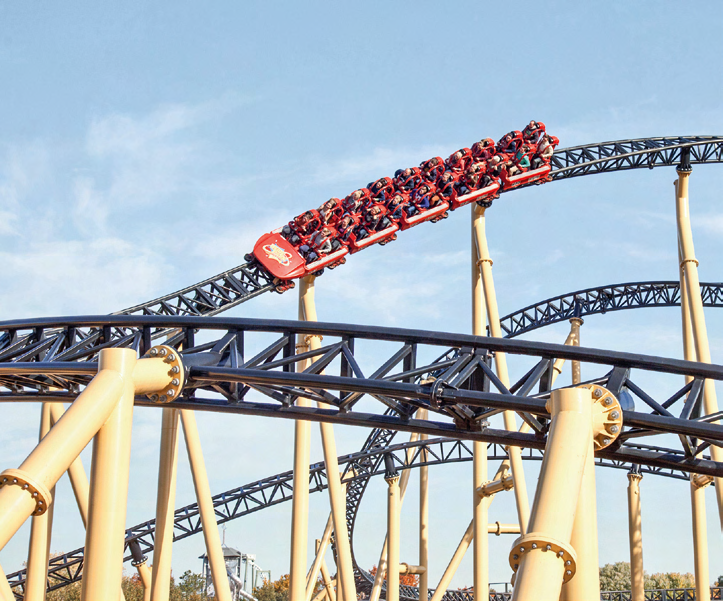
The Thermal Challenge of High-Speed Operations
Most conventional industrial polyurethanes rely on MDI or TDI as their base chemical isocyanates. While highly effective for low-speed material handling, these materials face severe limitations in high-speed, high-G environments. When a roller coaster train travels at extreme velocities, the wheels undergo rapid, continuous compression and deflection. This cyclic deformation creates intense internal friction, leading to massive heat buildup within the polyurethane matrix. Under these conditions, standard elastomers risk melting, losing structural integrity, or suffering from breaking apart.
Why NDI Meets the Demanding Requirements
NDI-based polyurethane has emerged as the industry standard due to its unique molecular engineering, which directly addresses the core operational challenges of high-G amusement rides:
1. Minimal Heat Generation (Low Hysteresis): NDI possesses a highly symmetrical and rigid molecular structure. This allows the wheel to deform and instantly snap back to its original shape with minimal energy loss. Consequently, internal heat buildup is drastically reduced, ensuring the wheel remains stable even during extended periods of high-speed operation.
2. Superior Dynamic Load Capacity: During high-G turns and steep drops, the wheels must support the immense weight of the fully loaded train without undergoing permanent deformation. NDI elastomers offer exceptional load-bearing performance under high dynamic stress.
3. Low Rolling Resistance: By minimizing energy dissipation, NDI wheels allow the vehicle to maintain maximum momentum across the entire track layout, preventing the train from stalling before reaching the final brake run.
4. Excellent Flat-Spot Resistance: When a train sits stationary in the station, heavy structural loads can cause standard wheels to develop flat sides. NDI's high structural memory prevents flat-spotting, ensuring a consistently smooth and vibration-free ride for passengers.
Optimized Engineering Across Different Wheel Positions
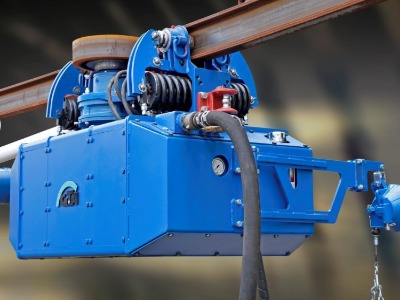
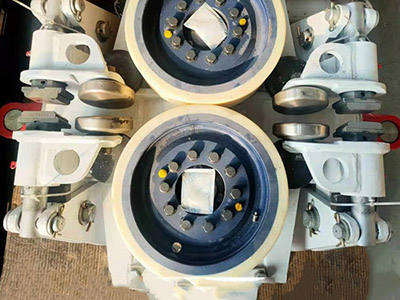
To achieve optimal ride performance, technical engineers utilize distinct formulations and hardness levels depending on the specific wheel placement within the bogie assembly:
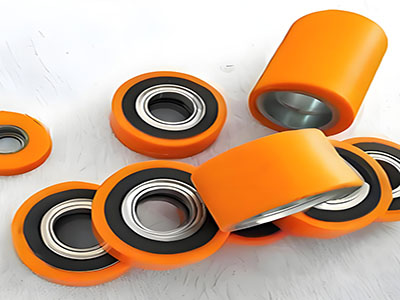
1. Road Wheels: Positioned at the top of the rail to bear the primary weight and speed of the train, these wheels typically utilize the hardest NDI grades (around 90–95 Shore A).
2. Guide & Up-Stop Wheels: Positioned on the sides and bottom of the rail to lock the train to the track, these wheels feature slightly modified formulas to enhance grip and dampen track vibrations.
3. Extreme-Speed Operations: For hypercoasters and giga-coasters exceeding speeds of 110–140 km/h, specialized, ultra-high-performance NDI grades are deployed to withstand the heightened thermal and mechanical stress profiles.
With its unmatched combination of thermal stability, dynamic load capacity, and durability, hot-cast NDI polyurethane remains the critical engineering component ensuring both the safety and thrill of modern high-speed amusement infrastructure.
Choosing a Polyurethane Wheel Manufacturer: A 5-Step Guide
Polyurethane on Aluminum Wheels: 5 Life Factors