-
 WhatsApp: +86 19941574798
-
 sale06@kfqizhongji.com
 WhatsApp: +86 19941574798
sale06@kfqizhongji.com
WhatsApp: +86 19941574798
sale06@kfqizhongji.com
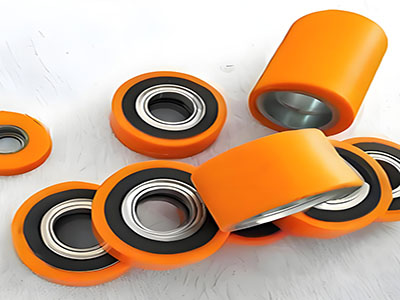
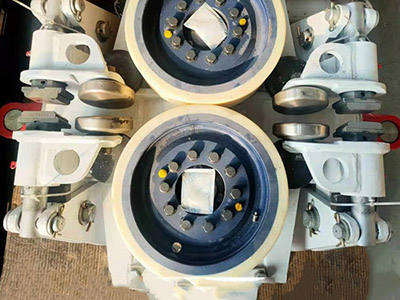
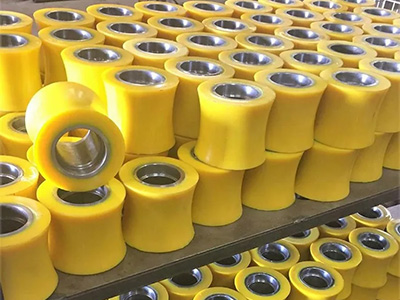
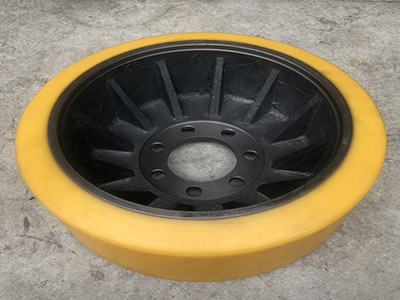
Our zero-marking polyurethane wheels for wafer transport AGVs optimize yield by combining high load-bearing capacity with specialized non-marking materials to protect sensitive fab environments.
In the precision-driven world of semiconductor fabrication (Fab), every millimeter of movement and every point of contact directly impacts yield. As Automated Guided Vehicles (AGVs) and Autonomous Mobile Robots (AMRs) become the standard for material handling, Zero-Marking Polyurethane Wheels have emerged as a critical component for maintaining cleanroom integrity and wafer safety.
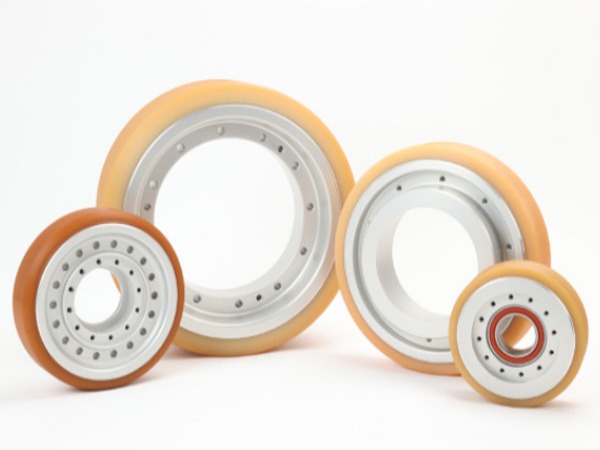
Semiconductor wafers are hypersensitive to vibration, static electricity, and particulate matter. During frequent steering and braking, traditional rubber wheels or standard synthetic materials can shed microscopic debris, leading to two critical risks:
1. Floor Contamination: Micro-particles can be swept upward by airflow, compromising ISO Class 1 cleanroom environments.
2. Vibration Transfer: Material degradation or flat-spotting causes uneven rolling, which increases the risk of micro-cracks in fragile silicon wafers.
Zero-marking polyurethane (PU) utilizes a unique molecular structure that ensures high traction without leaving carbon black, oils, or physical streaks on epoxy resins or raised cleanroom flooring.
A. Superior Cleanliness and Low Outgassing
Polyurethane is highly chemically stable. Unlike rubber, it does not require carbon black fillers, ensuring ultra-low particle generation even under high-frequency friction. Furthermore, specialized cleanroom-grade PU formulations feature Low Outgassing properties, preventing the release of Volatile Organic Compounds (VOCs) that could deposit onto wafer surfaces.
B. Precision Traction with Zero Vibration
Wafer handling requires AGVs to achieve "soft landings" and precise positioning.
High Resilience: PU wheels act as shock absorbers, dampening micro-vibrations caused by floor imperfections.
Consistent Friction: Whether starting or executing an emergency stop, PU wheels provide steady grip to prevent slipping, which is essential for robotic synchronization.
C. Advanced Anti-Static (ESD) Properties
Electrostatic discharge (ESD) is a primary threat to sensitive electronic components. Professional zero-marking wheels can be engineered with conductive or dissipative additives, maintaining surface resistivity typically to safely bleed off static charges.
When selecting wheels for wafer transport, consider these technical benchmarks:
1. Shore Hardness: Typically 85A to 95A to balance load-bearing capacity with vibration dampening.
2. Dynamic Load Rating: Ensure the material resists "flat-spotting" during long stationary periods while carrying heavy FOUP loads.
3. Chemical Compatibility: Verify that the wheel remains stable when exposed to common cleanroom cleaning agents like Isopropyl Alcohol (IPA).
| Model | Wheel dimension (mm) | Wheel width (mm) | Install diameter(mm) | Load capacity (kgs) |
| AGV130/50 | 130 | 50 | 106 | 500 |
| AGV144/32 | 144 | 32 | 95 | 300 |
| AGV160/40 | 160 | 40 | 38 | 500 |
| AGV165/37 | 165 | 37 | 93 | 400 |
| AGV170/40 | 170 | 40 | 63 | 500 |
| AGV177/37 | 177 | 37 | 93 | 500 |
| AGV180/50 | 180 | 50 | 35 | 600 |
In wafer transport, wheels are more than just consumables; they are a safeguard for the entire process. By adopting zero-marking polyurethane wheels, facilities can significantly reduce cleanroom maintenance costs and mitigate vibration and ESD risks, providing an invisible shield for expensive semiconductor assets. Contact us!
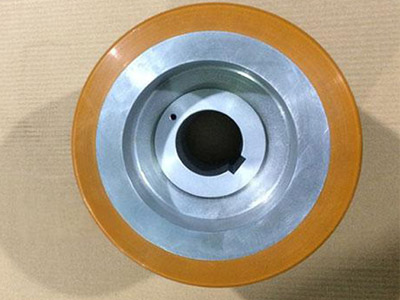
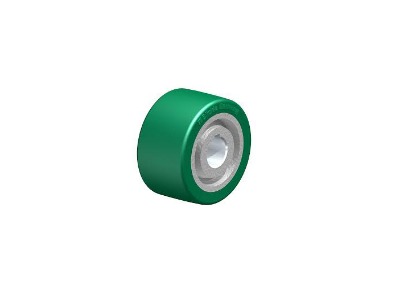
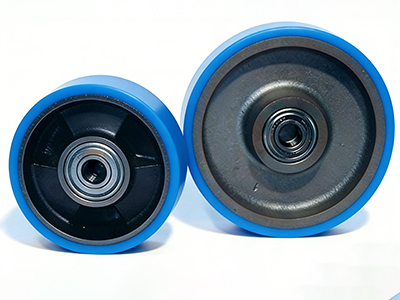
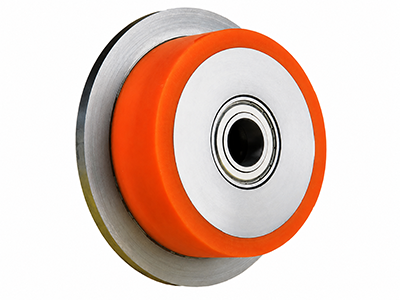
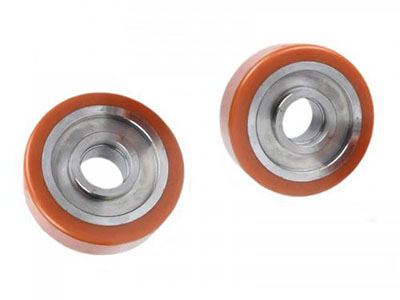
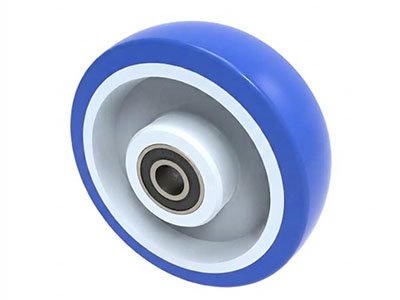
ESD Polyurethane Wheels for Semiconductor Handling
Chemical-Resistant Wheels for Semiconductor Fab & Cleanroom Transport System