-
 WhatsApp: +86 19941574798
-
 sale06@kfqizhongji.com
 WhatsApp: +86 19941574798
sale06@kfqizhongji.com
WhatsApp: +86 19941574798
sale06@kfqizhongji.com
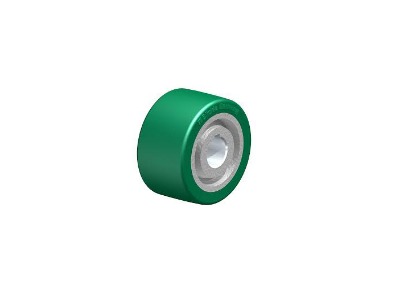
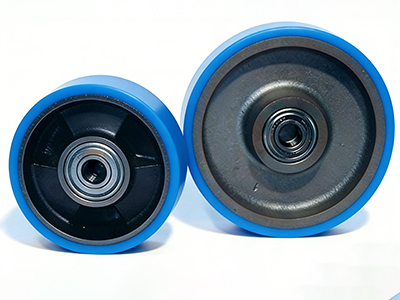
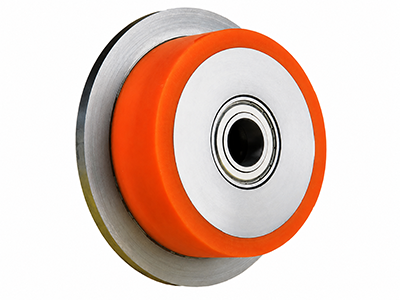
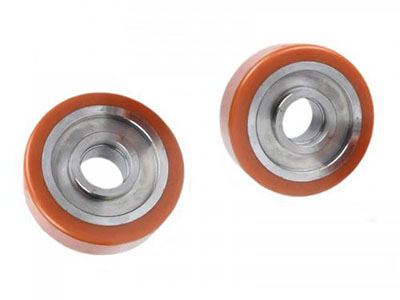
ESD Polyurethane Wheels deliver reliable electrostatic discharge protection, cleanroom compatibility, and durable performance for semiconductor material handling equipment—from AGVs and AMRs to FOUP carts.
In the world of semiconductor manufacturing and packaging, precision is measured in nanometers, and risks are often invisible to the naked eye. Material handling—involving Front Opening Unified Pods (FOUPs), precision instrument carts, and Automated Guided Vehicles (AMRs/AGVs)—is an incredibly active link in daily Cleanroom and Fab operations. However, standard wheels generate and accumulate massive electrostatic charges through friction with the floor. For highly sensitive semiconductor components, a single electrostatic discharge (ESD) event can puncture microcircuits, resulting in the scrapping of expensive wafers. To solve this critical pain point, ESD Polyurethane (PU) Wheels have emerged as the industry standard for smart logistics and precision handling.
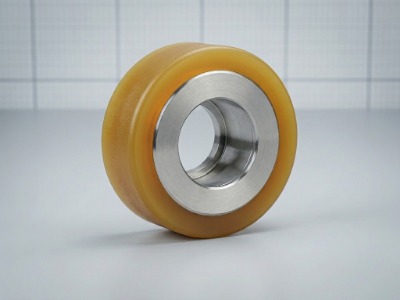
Core Advantages: Why Are They the Optimal Solution for Semiconductors?
Wheels in a semiconductor cleanroom are held to draconian standards. They must prevent static while also meeting zero-dust, high-load, and vibration-damping requirements. ESD PU wheels perfectly address these pain points:
1. Superior Static Dissipation (ESD Protection):The wheels create a complete grounding pathway with the ESD flooring. Whether it is a manual cart or an AMRs/AGV, static generated during movement is instantaneously discharged into the ground, protecting the onboard wafers and chips.
2. Non-Marking and Cleanroom Compatible:Traditional anti-static rubber wheels often contain free carbon black, which leaves black streaks or wear particles on cleanroom floors, compromising ISO cleanroom air quality. Modern ESD PU wheels use light gray or non-marking formulas, boast excellent wear resistance, and generate virtually zero shedding or dust.
3. Vibration Dampening and Silent Buffering:Wafers are extremely vulnerable to vibrations during transport. Polyurethane, as a high-quality elastomer, offers excellent physical cushioning. It effectively absorbs micro-bumps and joint vibrations from the floor, ensuring the structural safety of the silicon wafers inside.
4. High Load Capacity & Low Rolling Resistance:Semiconductor equipment and automated warehousing robots are heavy. Compared to rubber, heavy-duty Cast Polyurethane (CPU) has massive mechanical strength and load-bearing capacity. It resists permanent flat-spotting deformation and offers very low startup resistance, making it ideal for 24/7 continuous AGV operations.
Technical Specifications Overview
Model | Dimension | Wheel diameter (mm) | Wheel width(mm) | Load capacity (kgs) |
| SC75/20 | 75*20 | 75 | 20 | 100 |
| SC100/30 | 100*30 | 100 | 30 | 200 |
| SC130/50 | 130*50 | 130 | 50 | 500 |
| SC130/55 | 130*55 | 130 | 55 | 600 |
| SC140/23 | 140*23 | 140 | 23 | 300 |
| SC158/55 | 160*55 | 160 | 55 | 700 |
| SC170/30 | 170*30 | 170 | 30 | 400 |
ESD Cast Polyurethane (CPU) Wheels in Semiconductors Fab
Driven by high-efficiency production cadence, AMRs/AGVs often travel at speeds exceeding 1 m/s. This rapid rolling causes friction with cleanroom floors, accumulating massive electrostatic charges. If not properly dissipated, these charges can interfere with onboard precision LiDAR sensors and microcontrollers, leading to system freezes, navigation drift, or sudden downtime. Our Cast Polyurethane (CPU) wheels maintain a stable surface resistance strictly between 10^6 Ω -10^9 Ω (Static Dissipative Grade). By acting as a continuous grounding pathway, our wheels not only protect sensitive onboard wafers but also shield the AGV’s electronic brain from electromagnetic interference (EMI).
Summary
In the semiconductor race where yield and efficiency are paramount, ignoring even the smallest risk is not an option. ESD Polyurethane Wheels may seem like a minor component at the bottom of a cart, but they shoulder the quadruple burden of anti-static, anti-vibration, anti-pollution, and high load capacity. They have become an indispensable cornerstone of micro-logistics in smart semiconductor fabs.
Upgrade Your Cleanroom Mobility Today
As a professional manufacturer of Cast Polyurethane (CPU) wheels, we offer customized ESD wheel solutions (hardness, load capacity, and tread patterns) tailored to your specific fab floor conditions. Contact our team today for your quote !
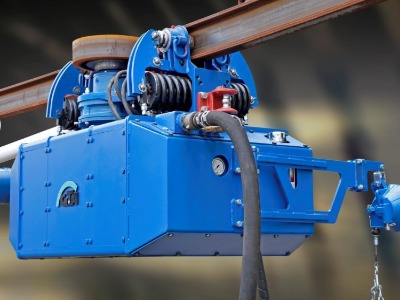
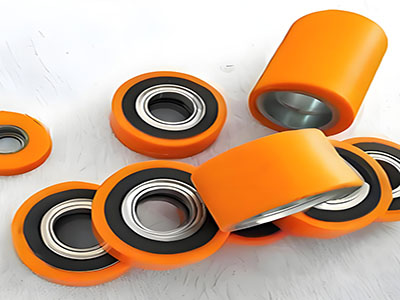
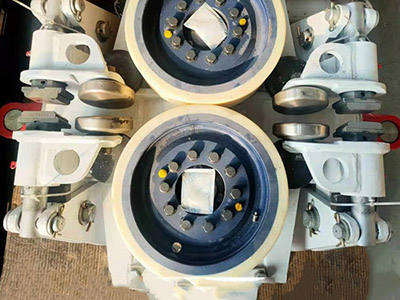
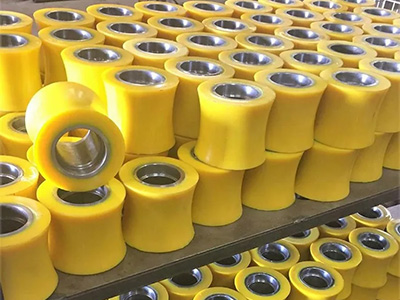
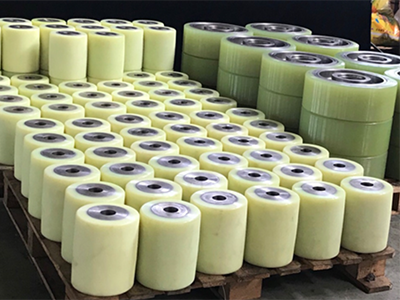
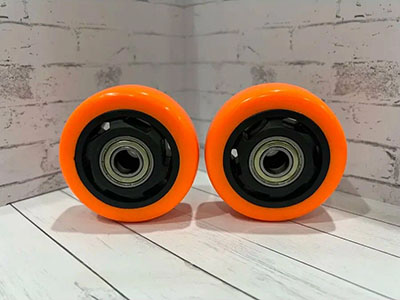
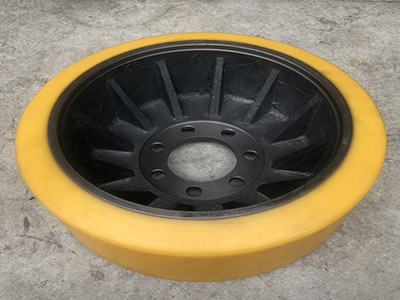
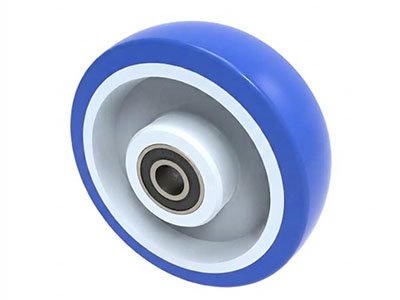
Autonomous Mobile Robot (AMR) Wheels for Cleanroom Environments
Chemical-Resistant Wheels for Semiconductor Fab & Cleanroom Transport System