-
 WhatsApp: +86 19941574798
-
 sale06@kfqizhongji.com
 WhatsApp: +86 19941574798
sale06@kfqizhongji.com
WhatsApp: +86 19941574798
sale06@kfqizhongji.com
Stop wheel failure caused by chemical exposure. Learn why specialized acid and alkali resistant PU wheels are the superior choice for stable, swelling-free Fab operations.
In the race toward 3nm, 2nm, and even more advanced nodes, the spotlight often falls on multi-million dollar lithography and etching systems. However, behind the seamless operation of a Wafer Fab, a small yet critical component is quietly driving the stability of the entire production line: the Chemical Resistant Polyurethane Guide Wheels.
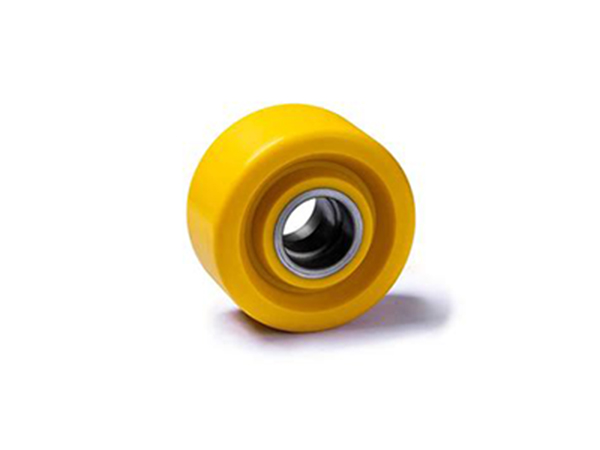
The "Fatal Flaw" in Extreme Environments: Limitations of Conventional Materials
Within the Wet Processing, Etching, and Chemical Delivery Systems (CDS) of a semiconductor plant, the environment is saturated with acid mists, strong alkalis, and various organic solvents. Furthermore, to maintain stringent cleanliness, equipment must undergo frequent high-intensity cleaning with IPA (Isopropyl Alcohol).
For years, traditional rubber or standard plastic guide wheels have proven fragile under these conditions. Common "pain points" include:
1. Swelling and Delamination: Exposure to solvents causes material expansion, leading to jammed wheels or catastrophic bonding failure.
2. Particle Contamination: Degradation-induced shedding is the "number one killer" of wafer yields.
3. Electrostatic Hazards: Static electricity generated by friction can discharge and destroy sensitive integrated circuits if not properly dissipated.
The Core Breakthrough: The Rise of Chemical Resistant Polyurethane
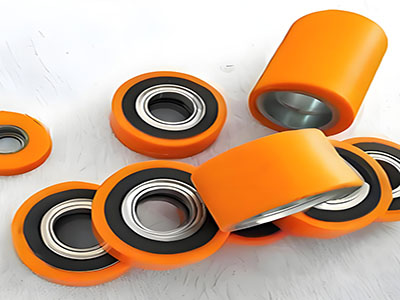
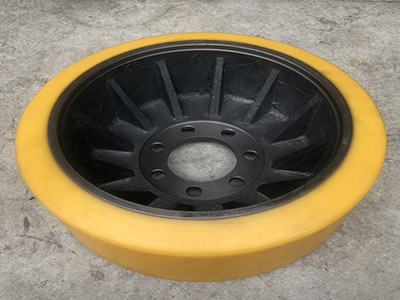
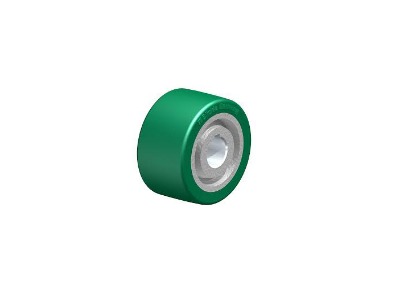
To overcome these challenges, a new generation of Chemical Resistant Polyurethane Guide Wheels has emerged. These are not merely "rubber-coated wheels"; they are a triumph of material science, utilizing high-performance polyether or modified polyurethane formulations to build a molecular barrier against corrosion.
1. Exceptional Chemical Inertness and Acid/Alkali Resistance: Unlike generic materials, these acid and alkali resistant PU wheels maintain extreme physical dimensions and structural integrity when exposed to oxidizing agents. Even in the event of accidental chemical spills, they prevent softening, ensuring precise path alignment for FOUPs (Front Opening Unified Pods) on automated transport lines.
2. Ultra-Low Particulate Generation for Class 1 Cleanrooms: In advanced manufacturing, any micron-level dust signifies expensive wafer scrap. High-performance Chemical Resistant Polyurethane Guide Wheels possess immense tear strength and abrasion resistance. Their low friction coefficient ensures ultra-low particulate generation, fully complying with the most rigorous cleanroom environmental standards.
3. Integrated ESD (Electrostatic Discharge) Protection: Static control is the lifeline of semiconductor production. These wheels integrate permanent anti-static agents within the PU matrix. This allows the wheels to provide stable ESD protection while maintaining chemical resilience, rapidly dissipating static charges generated during movement to protect expensive wafers from electromagnetic damage.
Why It Is Becoming the Standard for Global Fabs
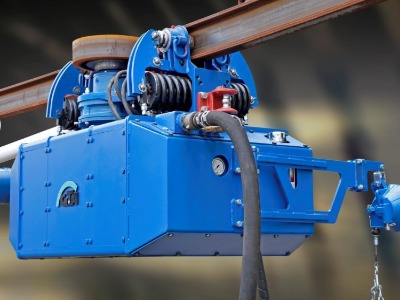
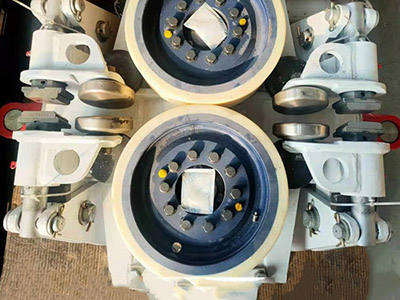
With the widespread adoption of OHT (Overhead Hoist Transport) and AGV/AMR systems, the requirement for wheels has shifted from "functional" to "absolutely reliable."
1. Minimized Downtime: Compared to the 3-6 month replacement cycle of standard materials, premium Chemical Resistant Polyurethane Guide Wheels can extend service life by more than 300%.
2. Enhanced Positioning Accuracy: The high-rebound nature of polyurethane provides superior vibration damping, reducing FOUP oscillation during high-speed transport and safeguarding the fragile wafers inside.
Conclusion
In an industry chasing nanometer precision, a single failure can result in millions of dollars in losses. With their superior corrosion resistance, stable ESD safety, and cleanroom-compliant performance, Chemical Resistant Polyurethane Guide Wheels are stepping out from behind the scenes to become the "unsung heroes" of global semiconductor productivity.
How to Enhance Lifespan of Industrial AGV Drive Wheels
Polyurethane on Aluminum Wheels: 5 Life Factors